Tuesday, September 8, 2009
ICELAND RECORDS LARGEST COMMERCIAL WHALE HUNT
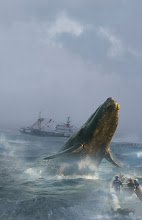
According to the the Whale and Dolphin Conservation Society, Iceland killed at least 93 endangered fin whales this summer. Fin whales are second to blues in size and are still only now slowly recovering from the unregulated yester-years of whaling. Along with the 63 minke whales that Iceland slaughtered during the same period, this total represents the biggest commercial whale hunt the North Atlantic has seen in several decades.

Sunday, August 9, 2009
VIDEO OF JAPAN'S LATEST WHALE HUNT
The Environmental Investigation Agency released footage of a whale hunt by Japan. The pro-slaughter nation, which has been successful at finding loopholes to continue hunting despite a ban on commercial whaling, is seen killing rare Baird Beaked Whales. Considered "small cetaceans" they are exempt from the worldwide ban. The Japanese take about 60 beaked whales every year. The meat is sold in supermarkets even though they contain toxic level so mercury.
Go to BREAKING NEWS for the video link.
Go to BREAKING NEWS for the video link.
Thursday, July 30, 2009
STATS SUPPORT WHALE WATCHING OVER HUNTING
In a report published by the International Fund for Animal Welfare (IFAW), revenues from whale watching in 2oo8 reached 1.3 billion pounds, double what it was a decade ago. This suggests that whale watching is far more profitable than killing them. Globally, whale watching has grown by 3.7% each year in the last decade. Last year alone, 13 million tourists in 119 countries went whale watching amd created almost 13,000 jobs.
On the other hand, A World Wildlife Fund analysis studied the range of direct and indirect costs associated with whaling, processing and marketing of whale products, combined that data with declining demand for whale meat and negative impacts trade and tourism boycotts. The analysis suggested that commercial whaling has little or no return for either the country’s economy or the taxpayers subsidizing hunting.
Citing Norway as an example, the government there has spent about US$5 million on public information, public relations and lobbying campaigns to garner support for whaling since 1992. Norway spent another US$10.5 million to cover the costs but scrapped it due to losses to the whalers. Japan, another nation actively continuing to hunt whales, needed US$12 million in taxpayer bailout to just break even last year. Overall, Japanese subsidies for whaling amounted to US$164 million since 1988. Wholesale prices of whale meat have plummeted since 1994.
"It’s clearly the most sustainable use of whales', said Patrick Ramage of the IFAW. 'You can watch the same whales dozens of times, but you can kill a whale only once."
On the other hand, A World Wildlife Fund analysis studied the range of direct and indirect costs associated with whaling, processing and marketing of whale products, combined that data with declining demand for whale meat and negative impacts trade and tourism boycotts. The analysis suggested that commercial whaling has little or no return for either the country’s economy or the taxpayers subsidizing hunting.
Citing Norway as an example, the government there has spent about US$5 million on public information, public relations and lobbying campaigns to garner support for whaling since 1992. Norway spent another US$10.5 million to cover the costs but scrapped it due to losses to the whalers. Japan, another nation actively continuing to hunt whales, needed US$12 million in taxpayer bailout to just break even last year. Overall, Japanese subsidies for whaling amounted to US$164 million since 1988. Wholesale prices of whale meat have plummeted since 1994.
"It’s clearly the most sustainable use of whales', said Patrick Ramage of the IFAW. 'You can watch the same whales dozens of times, but you can kill a whale only once."
Friday, June 19, 2009
FUTURE & FATE OF WHALES HANGS IN THE BALANCE
New controversy brewed ahead of the International Whaling Commission meeting next week in Maderia that is already contentious. Greenland wants IWC approval to slaughter 50 humpback whales in a semi-autonomous Danish territory and has sought the support of Sweden to garner European support.
Adding to the animosity today was confirmation that, between 1943 and 1976, Russia—then the Soviet Union—had killed 200,000 more whales than they reported, including calves, pregnant females and severely endangered species. It is believed that this flagrant and indiscriminate slaughter likely doomed the Right Whale in the Southern hemisphere to extinction.
The upcoming IWC session, set to begin on Monday, could be historic. Earlier this year, pro-slaughter allies met in Tokyo to vote in a bloc to win a key vote that could see the resumption of commercial whaling later this summer. Ever since the 1985 moratorium on all slaughter for commercial purposes, Japan has been consistently taking 1000 whales a year under a loophole called “scientific and research” whaling. In response to the Tokyo meeting, the European Union quickly organized an anti-whaling bloc of votes. Green activists also exposed a secret back room deal (dubbed Whalergate) which would have allowed Japan unlimited quota along its coast in exchange for reduced hunts in the Antarctic. IWC Commissioner Bill Hogarth from the US, who led these secret negotiations, stepped down leaving the matter unresolved and the IWC deeply divided.
Adding to the animosity today was confirmation that, between 1943 and 1976, Russia—then the Soviet Union—had killed 200,000 more whales than they reported, including calves, pregnant females and severely endangered species. It is believed that this flagrant and indiscriminate slaughter likely doomed the Right Whale in the Southern hemisphere to extinction.
The upcoming IWC session, set to begin on Monday, could be historic. Earlier this year, pro-slaughter allies met in Tokyo to vote in a bloc to win a key vote that could see the resumption of commercial whaling later this summer. Ever since the 1985 moratorium on all slaughter for commercial purposes, Japan has been consistently taking 1000 whales a year under a loophole called “scientific and research” whaling. In response to the Tokyo meeting, the European Union quickly organized an anti-whaling bloc of votes. Green activists also exposed a secret back room deal (dubbed Whalergate) which would have allowed Japan unlimited quota along its coast in exchange for reduced hunts in the Antarctic. IWC Commissioner Bill Hogarth from the US, who led these secret negotiations, stepped down leaving the matter unresolved and the IWC deeply divided.
Monday, June 8, 2009
BREAKING NEWS! IWC PAPERS CONFIRM "WHALERGATE"
The International Whaling Commission (IWC) released documents which confirmed that the US (under the Bush Administration) led the talks to relax the global moratorium on whaling and grant Japan the right to kill whales along its coastline. Exposed earlier this year as "Whalergate", this secret deal has nevertheless emboldened other pro-slaughter nations to take an aggressive stance at the upcoming IWC meetings in June. A victory could see the resumption of commercial whaling later this summer.
Wednesday, May 27, 2009
IWC CHIEF STEPS DOWN AS WHALE HUNTS RESUME
William Hogarth, the outgoing head of the International Whaling Commission, stepped down. Appointed byGeorge W. Bush, this biologist leaves the IWC deeply divided and in a state of crisis.The scandal known as "Whalergate" broke under his watch, when activists exposed a clandestine deal that would allow Japan to kill more whales along its coast for reduced "research and scientific" hunts in the Antarctic. He also failed to negotiate an agreement with Japan, Korea and of other pro-slaughter nations ahead of this summer's IWC meeting, when key votes could see the resumption of commercial whaling this year.
News also broke yesterday that Iceland's whalers were heading to sea to hunt and kill 250 whales despite protests and letters of opposition from all around the world. Following the collapse of the nation's banks, Iceland's government had been taking out full page ads promoting whale slaughters as a way to ease the financial crisis. Meanwhile, with children observing 'to learn,' natives of the Faroe Islands killed 150 pilot whales. Inhabitants here claim the slaughter of pilot whales is a tradition that allegedly dates back 1200 years and point to the discovery of bone fragments found in Gøta to justify the hunt.
News also broke yesterday that Iceland's whalers were heading to sea to hunt and kill 250 whales despite protests and letters of opposition from all around the world. Following the collapse of the nation's banks, Iceland's government had been taking out full page ads promoting whale slaughters as a way to ease the financial crisis. Meanwhile, with children observing 'to learn,' natives of the Faroe Islands killed 150 pilot whales. Inhabitants here claim the slaughter of pilot whales is a tradition that allegedly dates back 1200 years and point to the discovery of bone fragments found in Gøta to justify the hunt.
Thursday, May 21, 2009
SUMMER OF SLAUGHTER GETS CLOSER
In Geneva, Japan and her pro-slaughter allies continued to disagree on the number of whales they want to kill. These talks were a part of continued negotiations to dissuade Japan from returning to commercial whaling as early as this summer. Japan wants permission for boats from its whaling ports in Abashiri, Ayukawa, Wada and Taiji to kill minkes along its coast in exchange for reducing the number of whales she takes under the IWC loophole called "research and scientific whaling" in the Antarctic.
Meanwhile, in Washington DC, Pierce Brosnan, the former James Bond star, visited the White House to lobby the Obama administration on the urgency to take the lead in the negotiations with Iceland, Japan and Norway. "Most people think they’ve been saved but they haven’t," said Brosnan. "The slaughter still goes on'.
If the talks fail, commercial whaling could begin this summer with our without the blessing of the IWC.
Meanwhile, in Washington DC, Pierce Brosnan, the former James Bond star, visited the White House to lobby the Obama administration on the urgency to take the lead in the negotiations with Iceland, Japan and Norway. "Most people think they’ve been saved but they haven’t," said Brosnan. "The slaughter still goes on'.
If the talks fail, commercial whaling could begin this summer with our without the blessing of the IWC.
Subscribe to:
Posts (Atom)