Tuesday, January 5, 2010
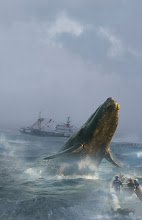
BOB BARKER'S WHALE OF A TALE
Bob Barker is a new ship that's joining the war against whaling. The vessel was retrofitted thanks to a $5 mil donation from Price is Right legend, Bob Barker. Read more. Link to it on Breaking News!

Thursday, December 17, 2009
UFOs TO BATTLE WHALERS?
Go the Breaking News!
Anti-whaling activists are using a small, space-age-like vessel to scare off Japan's whaling fleet from Antarctic waters - with a ghostly tune as its main weapon.
Anti-whaling activists are using a small, space-age-like vessel to scare off Japan's whaling fleet from Antarctic waters - with a ghostly tune as its main weapon.
Thursday, December 3, 2009
WHALE IN A FIGHT FOR HIS LIFE
See Breaking News about a juvenile humpback whale entangled in hundreds of feet of heavy rope off Hawaii's coast. The situation is "life-threatening.''
Tuesday, September 8, 2009
NEW TWIST IN JAPAN'S WHALING DUPLICITY
It has been widely acknowledged that Japan carries two types of minke whale stocks:
1) the O-stock, which is hunted under the IWC loophole of "scientifc and research" whaling;
2) the J-stock, which is substantially depleted and has been protected since 1986 but continues to be killed as "bycatch."
A new study now finds that Japan slaughters just as many J-stock whales as they do the O-stock. Much of this bycatch is unregulated and goes unreported. Using DNA testing, green activists have also matched meat from the hunts with that sold and served in markets and restaurants, even though Japan has consistently maintained it does not hunt whales for commercial purposes.
1) the O-stock, which is hunted under the IWC loophole of "scientifc and research" whaling;
2) the J-stock, which is substantially depleted and has been protected since 1986 but continues to be killed as "bycatch."
A new study now finds that Japan slaughters just as many J-stock whales as they do the O-stock. Much of this bycatch is unregulated and goes unreported. Using DNA testing, green activists have also matched meat from the hunts with that sold and served in markets and restaurants, even though Japan has consistently maintained it does not hunt whales for commercial purposes.
ICELAND RECORDS LARGEST COMMERCIAL WHALE HUNT
According to the the Whale and Dolphin Conservation Society, Iceland killed at least 93 endangered fin whales this summer. Fin whales are second to blues in size and are still only now slowly recovering from the unregulated yester-years of whaling. Along with the 63 minke whales that Iceland slaughtered during the same period, this total represents the biggest commercial whale hunt the North Atlantic has seen in several decades.
Sunday, August 9, 2009
VIDEO OF JAPAN'S LATEST WHALE HUNT
The Environmental Investigation Agency released footage of a whale hunt by Japan. The pro-slaughter nation, which has been successful at finding loopholes to continue hunting despite a ban on commercial whaling, is seen killing rare Baird Beaked Whales. Considered "small cetaceans" they are exempt from the worldwide ban. The Japanese take about 60 beaked whales every year. The meat is sold in supermarkets even though they contain toxic level so mercury.
Go to BREAKING NEWS for the video link.
Go to BREAKING NEWS for the video link.
Thursday, July 30, 2009
STATS SUPPORT WHALE WATCHING OVER HUNTING
In a report published by the International Fund for Animal Welfare (IFAW), revenues from whale watching in 2oo8 reached 1.3 billion pounds, double what it was a decade ago. This suggests that whale watching is far more profitable than killing them. Globally, whale watching has grown by 3.7% each year in the last decade. Last year alone, 13 million tourists in 119 countries went whale watching amd created almost 13,000 jobs.
On the other hand, A World Wildlife Fund analysis studied the range of direct and indirect costs associated with whaling, processing and marketing of whale products, combined that data with declining demand for whale meat and negative impacts trade and tourism boycotts. The analysis suggested that commercial whaling has little or no return for either the country’s economy or the taxpayers subsidizing hunting.
Citing Norway as an example, the government there has spent about US$5 million on public information, public relations and lobbying campaigns to garner support for whaling since 1992. Norway spent another US$10.5 million to cover the costs but scrapped it due to losses to the whalers. Japan, another nation actively continuing to hunt whales, needed US$12 million in taxpayer bailout to just break even last year. Overall, Japanese subsidies for whaling amounted to US$164 million since 1988. Wholesale prices of whale meat have plummeted since 1994.
"It’s clearly the most sustainable use of whales', said Patrick Ramage of the IFAW. 'You can watch the same whales dozens of times, but you can kill a whale only once."
On the other hand, A World Wildlife Fund analysis studied the range of direct and indirect costs associated with whaling, processing and marketing of whale products, combined that data with declining demand for whale meat and negative impacts trade and tourism boycotts. The analysis suggested that commercial whaling has little or no return for either the country’s economy or the taxpayers subsidizing hunting.
Citing Norway as an example, the government there has spent about US$5 million on public information, public relations and lobbying campaigns to garner support for whaling since 1992. Norway spent another US$10.5 million to cover the costs but scrapped it due to losses to the whalers. Japan, another nation actively continuing to hunt whales, needed US$12 million in taxpayer bailout to just break even last year. Overall, Japanese subsidies for whaling amounted to US$164 million since 1988. Wholesale prices of whale meat have plummeted since 1994.
"It’s clearly the most sustainable use of whales', said Patrick Ramage of the IFAW. 'You can watch the same whales dozens of times, but you can kill a whale only once."
Subscribe to:
Posts (Atom)